The Forest is Speaking. Are we Finally Listening?

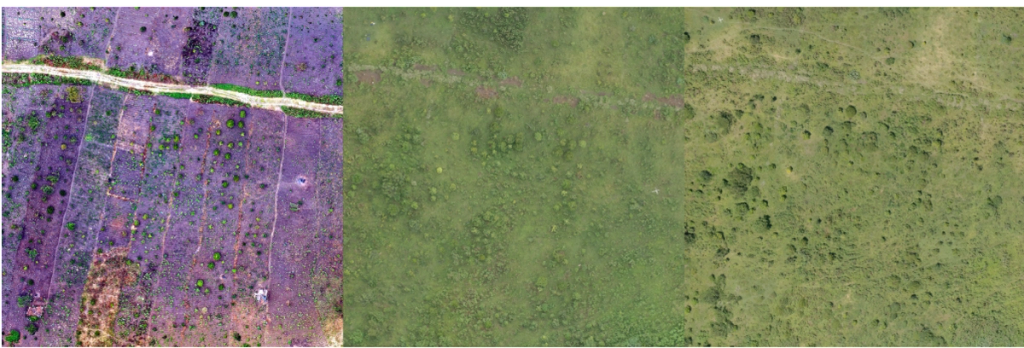
Photo Credit: Centre for Data Science and Artificial Intelligence
At dawn in Kieni forest, a bird calls from somewhere beyond the canopy. A year from now, if that call disappears, would anyone notice? The question sounds simple. Yet it lies at the heart of one of the greatest environmental challenges of our time.
Forests rarely make grand announcements about their decline. Instead, the signs emerge gradually: a stream carries less water than it once did, an animal species becomes harder to find, and a once-familiar birdsong no longer greets the morning. Thus, the antagonist is not always deforestation. Sometimes it is silence. It hides in the spaces between observations. It thrives when change goes unmeasured and unnoticed. By the time the silence becomes obvious, the damage may already be done.
Breaking this silence is precisely why forest monitoring matters. At its core, forest monitoring is not simply about collecting data. It is about learning to notice the earliest signals of ecological change before they become ecological crises. As climate change, biodiversity loss, and growing pressure on natural resources intensify, the need to detect these signals early has never been greater.
Even so, across Africa a fundamental challenge stands in the way. The continent is rich in biodiversity and ecological knowledge, but poor in the datasets that can be used in modern conservation. Much of today's artificial intelligence for forest monitoring has been trained using data collected in North America, Europe, Asia, and Australia. These systems are sophisticated, but many have never truly reflected the reality of African forests.
As a result, forests that regulate water systems, store carbon, and support millions of livelihoods are often interpreted through models developed for entirely different environments. The danger is not merely technical. It is practical. A misidentified species can distort conservation priorities. An inaccurate forest assessment can undermine carbon markets. A poorly informed restoration strategy can waste resources that communities cannot afford to lose.
Poor data creates blind spots. And blind spots are where silence thrives. Recognizing this challenge, our work began with a simple conviction: African forests must be understood on their own terms. That led to the creation of Miti360, a locally curated forest monitoring dataset from a 770-hectare reforested stand in Kieni forest, Kiambu county. Situated within the Aberdare ecosystem, one of Kenya's five major water towers, Kieni forest plays a vital role in supporting biodiversity, regulating climate, and supplying water to millions of people downstream.
Miti360 combines three complementary perspectives: high resolution aerial imagery captured by drones, ground-level observations collected using smartphones and custom-built stereo cameras, and weather data from local TAHMO (Trans-African Hydro-Meteorological Observatory) weather stations.
Together, these perspectives create something greater than the sum of their parts. They transform observation into understanding. At the centre of this effort is DSAIL’s TreeVision, a low-computation monitoring system designed specifically for resource-constrained environments. Using stereoscopic vision and deep learning, TreeVision estimates key tree characteristics such as height, crown diameter, and diameter at breast height. By reconstructing depth from paired images, it generates three-dimensional representations of trees directly in the field.
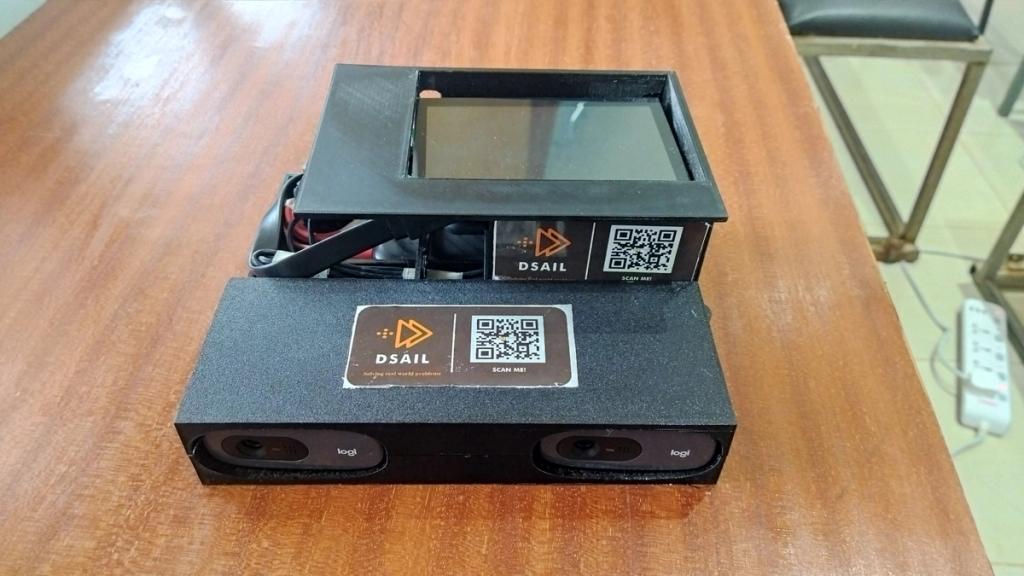
For forest practitioners, TreeVision extends the reach of visual observation. Beyond the canopy structure and biomass, forests communicate through the diversity of life they sustain. Birds, insects, mammals, and microorganisms form a living network whose condition often reveals itself through sound long before it becomes visible through imagery.
A forest speaks before it falls silent. However, traditional biodiversity monitoring often struggles to capture those signals at scale. Researchers may collect hundreds or thousands of hours of bird sound recordings, only to spend weeks manually reviewing them. Valuable ecological signals can remain hidden until long after they first appeared.
And while we are analyzing yesterday's recordings, silence continues to advance. Using low-cost hardware equipped with artificial intelligence we’ve developed a bioacoustics edge inference device capable of identifying bird species directly where sounds are recorded. Rather than transmitting vast quantities of audio for later processing, the analysis happens on-site and in real time.
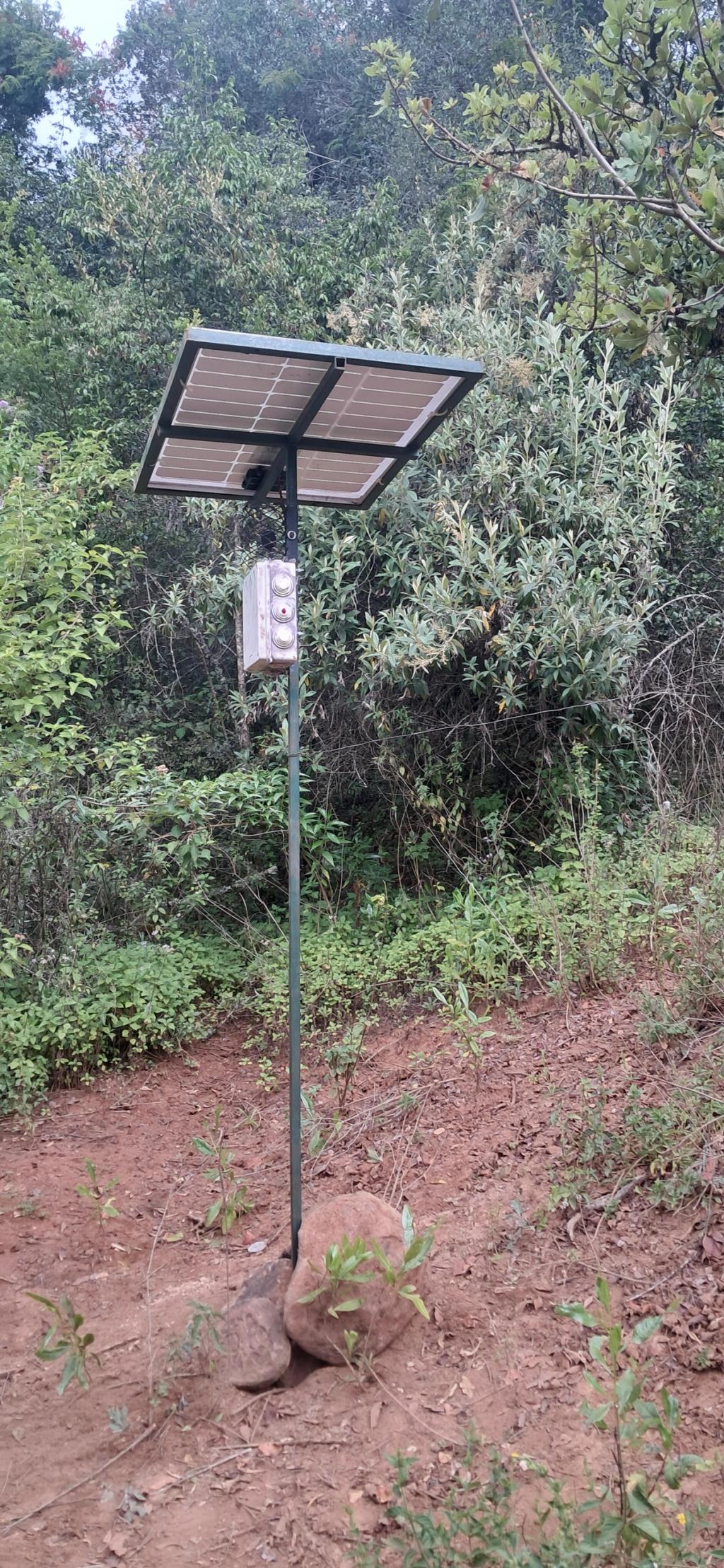
Every bird call becomes more than a sound. It becomes a measurement. A data point. A signal. A warning. Or a sign of recovery. With that, conservationists will no longer be waiting weeks to understand what is happening inside a forest. They can detect biodiversity shifts earlier, monitor ecosystem health continuously, and respond more rapidly to emerging threats.
If TreeVision helps us see the forest, bioacoustic edge inferencing helps us hear it. Together, they form a powerful arsenal to combat the silence. They create a better understanding of forest health than any single monitoring method could achieve alone.
The future of conservation will not be determined solely by how many trees we plant or how many hectares we restore. It will also be determined by our ability to understand ecosystems before they reach a point of irreversible decline. It will depend on whether we can build monitoring systems that reflect local realities, empower communities, and reveal change while there is still time to act. And that is why the fight against silence matters.
Because somewhere in Kieni forest tomorrow morning, a bird will call from beyond the canopy. Most people will never hear it. Yet that single sound may tell us whether a forest is thriving, struggling, or beginning to fall silent. The question is not whether the forest is speaking. The question is whether we are finally learning to listen.