Responsible AI Collaborators Initiative


A printable for the AI4D Responsible AI Collaborative Initiative is available here.
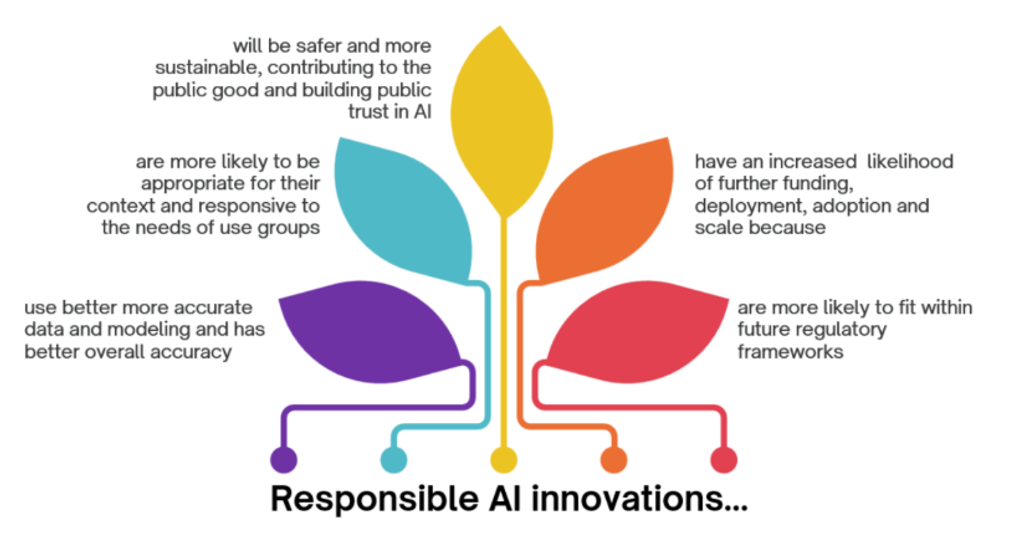
We believe developing and deploying responsible AI innovations has several benefits. For innovators, the value of putting responsible AI principles into practice – and therefore seeking support and validation in how to do that – is to improve the overall quality of the solution they are developing.
The Challenge of Responsible AI in Practice
There are also strong indications that responsibility in AI enhances the scaling success of AI innovations. While there exists considerable content, working groups, and guides on 'what is responsible AI', the application of the principles in practice remains challenging for the developers and innovators out there building AI applications.
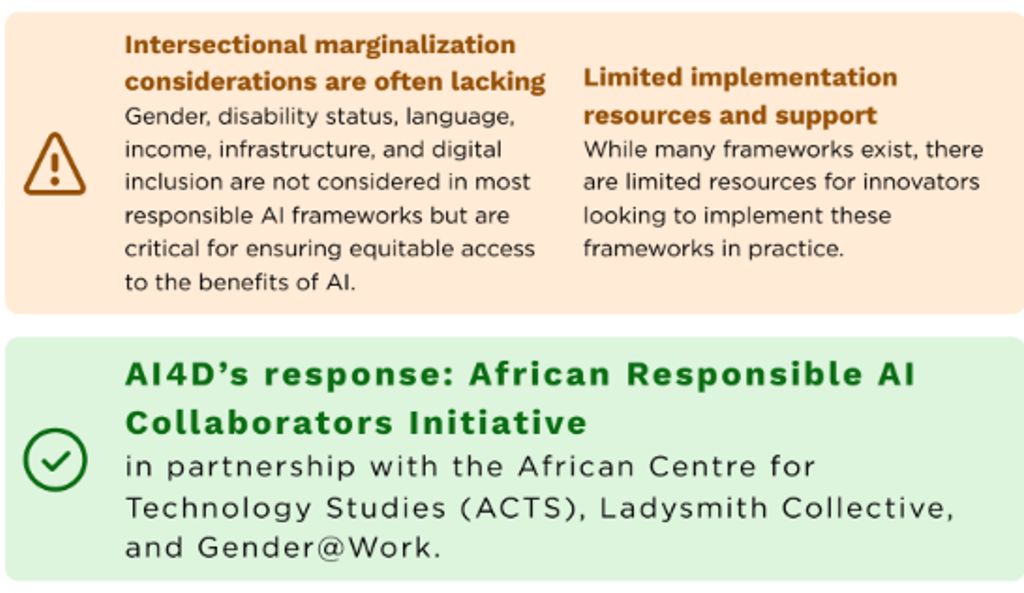
AI innovators in the AI4D network already receive diverse and tailored support to help them in their journey to deployment and scale, particularly from domain experts and senior AI developers. The Responsible AI Collaborators Initiative is a compliment to this, offering tailored conversational sessions to individual innovators designed to ensure that solutions are inclusive, ethical, safe, sustainable and rights-respecting. There are three defining features of our approach:
Responsible AI by leveraging Complementary Strengths
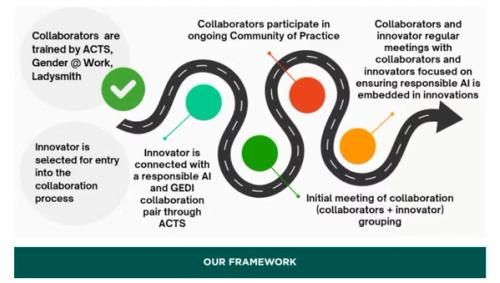
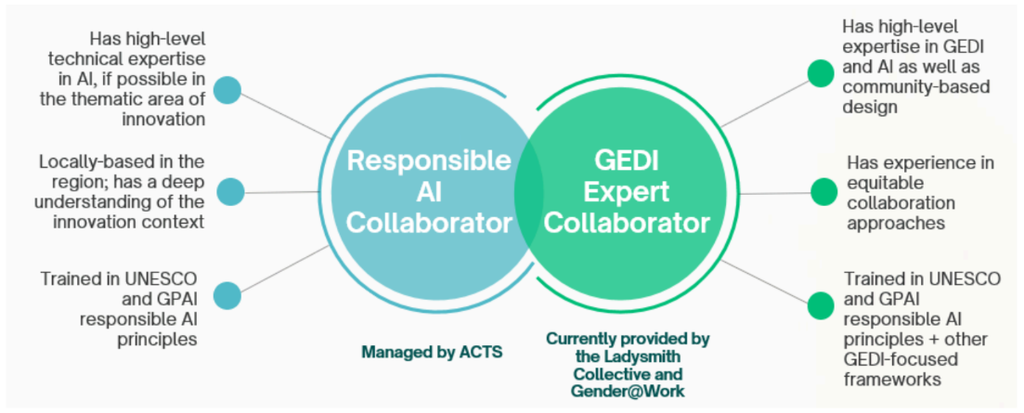
The collaborators are local experts from diverse backgrounds, including computer scientists, domain experts from health, education, agriculture and more, and gender and inclusion specialists. All of the collaborators have participated in a responsible AI training program, and are equipped with a mentorship framework that outlines the practice implementation of responsible AI as seen in the framework section below.
Responsible AI through Conversation
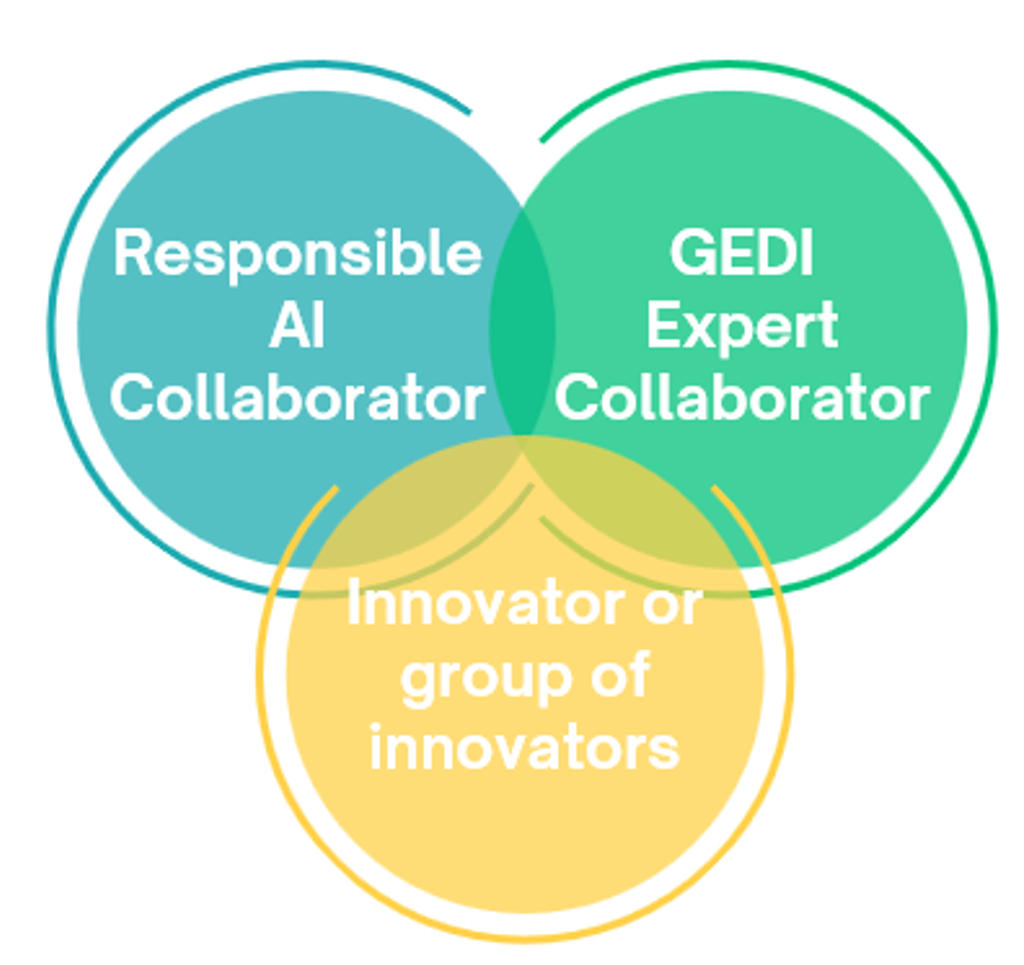
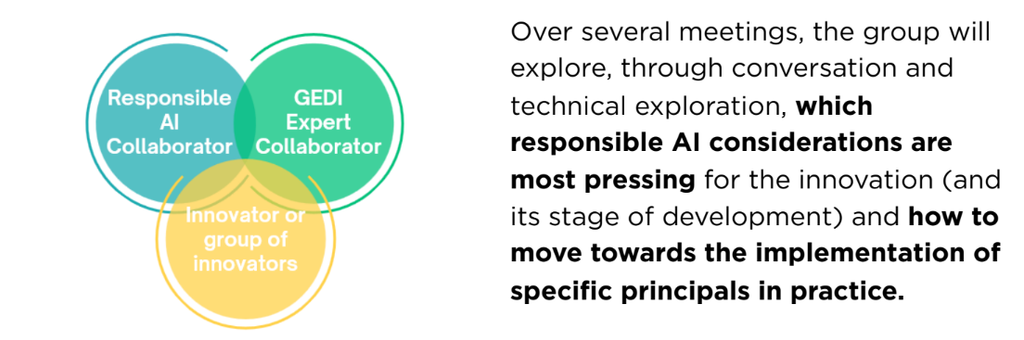
The collaborators and innovators work together to explore a multitude of issues, and to emphasize GEDI across them. Each ‘pairing’ includes the innovator (or group of innovators working together), a trained responsible AI mentor and a dedicated GEDI mentor who work in tandem.
Responsible AI through Ongoing Collaboration
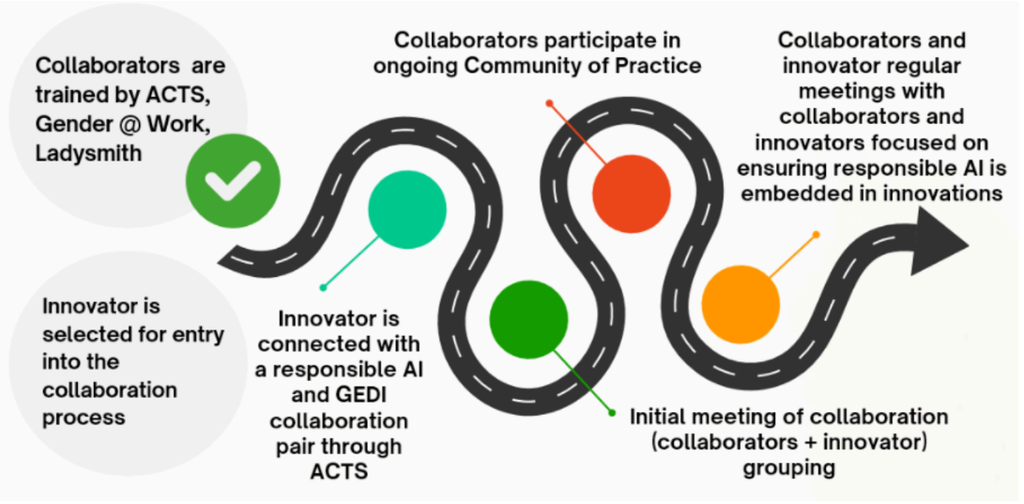
The matching of collaborators and innovators depends on the nature of the innovation and the challenges that the innovators self-identifies to be facing. Meetings between the collaborators and innovators take place at a pace and frequency determined by need and demand, but ideally a minimum of one session per month is recommended. All of the collaborators participate in quarterly Community of Practice sessions with trainers to explore issues and seek support on specific challenges they are working to address alongside innovators.
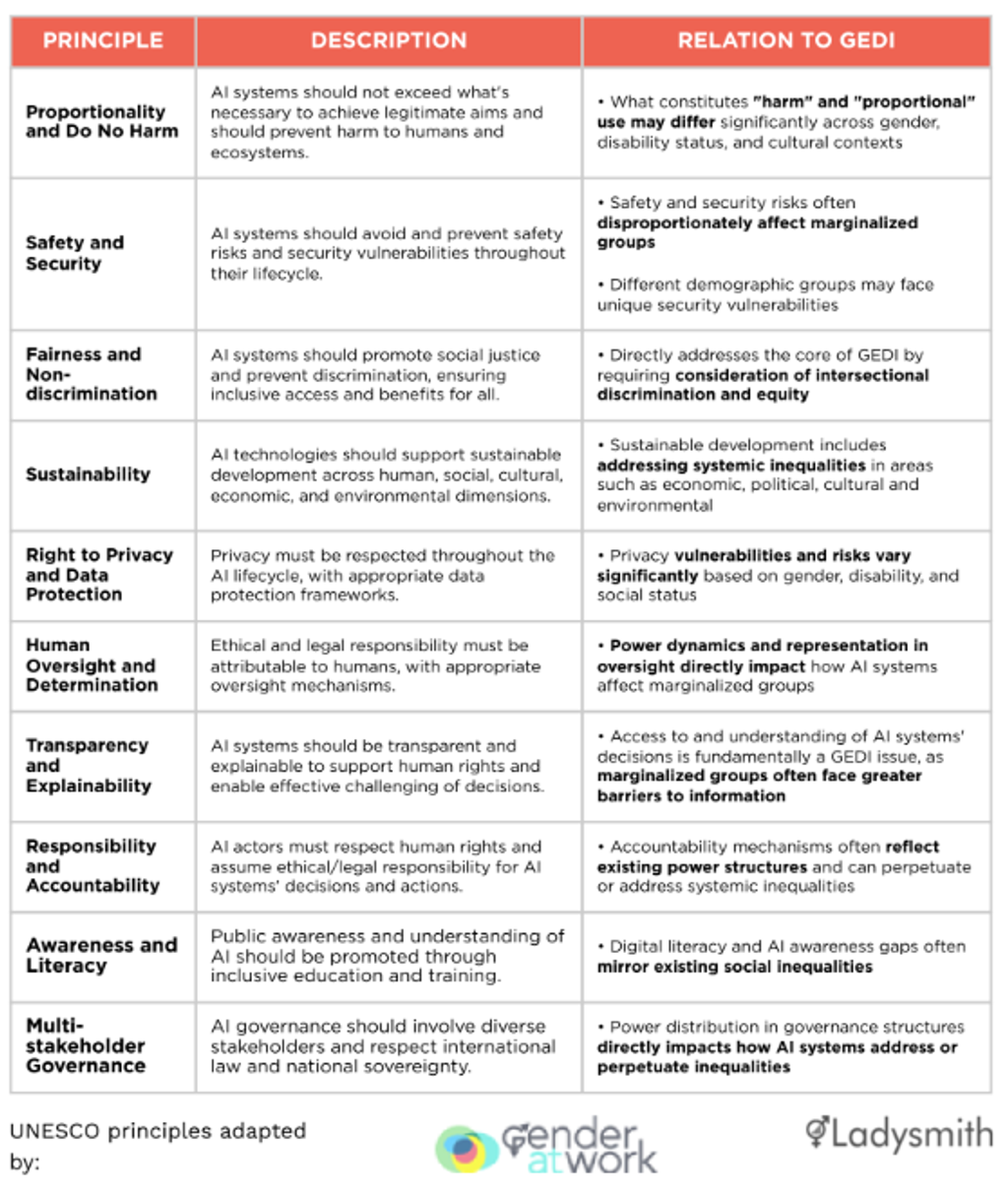
The collaborators framework for responsible AI aligns with the UNESCO principles in their Recommendation on the Ethics of Artificial Intelligence, detailed below: