Why Local Innovators Are Key To The Future Of AI in Healthcare in Africa

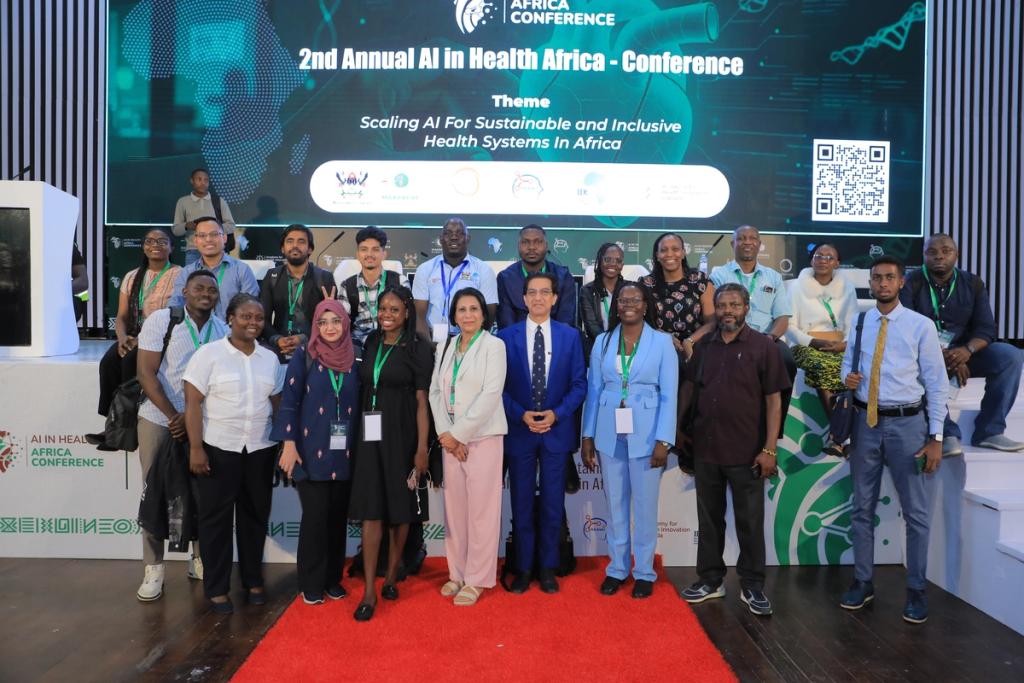
Photo Credit: HASH Project
This article is republished from the HASH (Hub for Artificial Intelligence in Maternal, Sexual and Reproductive Health) Linkedin Page. Read the original article
While addressing delegates at the 2nd AI in Health Africa Conference organised by Makerere AI Health Lab in partnership with the Infectious Diseases Institute (IDI) in November 2025, Uganda’s Minister for Science, Technology, and Innovation, Hon. Dr. Monica Musenero, made a powerful call.
"Africa must invest in indigenous innovation to reduce reliance on foreign technologies."
Her message was clear. Solutions built for our context, by our people, are essential if we are to build resilient and sustainable systems. In today’s rapidly evolving world, innovation is no longer optional. It is a necessity. Across sectors, and especially in healthcare, innovation is shaping how we respond to complex challenges and deliver better outcomes.Nowhere is this more urgent than in Sub-Saharan Africa. Our health systems continue to face immense pressure from infectious diseases like malaria and HIV/AIDS, to rising maternal mortality and an increasing burden of non-communicable diseases such as diabetes and hypertension.This is where local innovators come in. Unlike externally developed technologies, local innovators bring something invaluable. Context. They understand cultural dynamics, health-seeking behaviors, infrastructure limitations, and policy realities. This positions them to design AI-driven solutions that are not only technically sound but also accessible, trusted, and scalable.
Why local innovators matter
First, they help build trust. Trust is at the core of effective healthcare. Ethical principles such as autonomy, beneficence, non-maleficence, and justice guide how care is delivered. Deeply rooted in their communities, local innovators are in a better position to uphold these principles when new technologies emerge. Because they understand the people they serve, they can design solutions that reduce resistance, respect local knowledge, and empower communities rather than exploit them.
Second, they bring contextual intelligence.Healthcare does not exist in a vacuum. Social, cultural, and environmental factors shape how services are accessed and used. Local innovators are uniquely positioned to collect and interpret data that reflects these realities. Such data facilitates the development of more precise, inclusive, and pertinent AI solutions that effectively function in their intended environments.
How do we support them?
If we are serious about unlocking the potential of local innovation, then we must intentionally create enabling environments. One powerful avenue is through innovation challenges and data science competitions. These platforms not only help identify and nurture talent but also encourage the development of practical, context-driven solutions. In a space where access to quality data is often limited due to privacy concerns and complex approval processes, such initiatives can provide structured pathways for innovation.
Governments also have a critical role to play. By promoting the adoption of locally developed AI solutions through procurement policies, enabling regulations, and national AI strategies, governments can create demand and accelerate scale. When public health systems adopt homegrown innovations, they validate them and open doors for sustainability and continuous improvement.
Equally important is the cost of internet access. Affordable and reliable connectivity is the backbone of digital innovation. High data costs continue to limit both developers and users, particularly in rural and underserved areas. Reducing these barriers expands participation, enhances collaboration, and allows solutions to reach the communities that need them most. We must also invest in infrastructure. AI development requires significant computational power, which remains out of reach for many innovators. Investing in shared GPU-based infrastructure through national data centers, universities, and innovation hubs can democratize access to high-performance computing. This not only reduces reliance on foreign cloud services but also strengthens data sovereignty and local capacity.
And finally, we must start early. Integrating AI and digital literacy into high school education is critical for building a sustainable talent pipeline. Early exposure equips young people with the skills, curiosity, and mindset needed to solve complex challenges. More importantly, it ensures that the next generation of innovators is deeply rooted in local realities.
The way forward
If we are serious about transforming healthcare across Africa, supporting local innovators cannot be an afterthought; it must be a priority.The talent, ideas, and commitment already exist within our communities. What is often missing is the environment that allows these innovators to thrive, experiment, and scale. By investing in local talent, improving access to data and infrastructure, and creating policies that support homegrown solutions, we move closer to building health systems that truly serve our people.The future of AI in healthcare in Africa will not be defined by imported technologies but by the innovators who understand our challenges firsthand and are determined to solve them.
The Obstetric Ultrasound AI Hackathon was funded by International Development Research Centre (IDRC) and organised by HASH in collaboration with NAAMII, University of Embu University of Lagos and PHC Global