A Machine Learning-Aided Platform for Point-of-Care Pregnancy Risk Assessment from 2D Ultrasound
Overview
An AI-powered maternal health tool developed in Uganda is helping detect high-risk pregnancies earlier than ever before with the potential to save the lives of thousands of mothers who would otherwise go undiagnosed until it's too late.
Maternal mortality remains one of Uganda's most pressing public health crises, compounded by limited access to specialist obstetric care in many regions. High-risk conditions like uterine fibroids often go undetected until they cause serious complications not because solutions don't exist, but because the tools to identify them are out of reach for most expectant mothers.
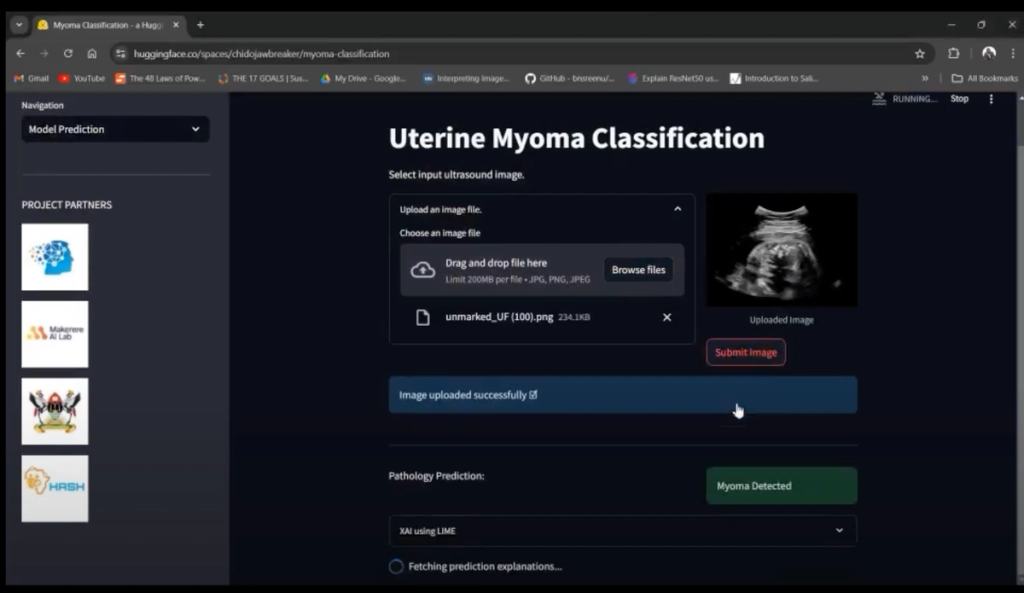
These AI-powered tools are designed to identify early warning signs of high-risk pregnancies, including the detection and classification of uterine fibroids, supporting continuous pregnancy health monitoring in settings where specialist care is scarce. The classification model incorporates an explainable AI component that generates visual segmentations showing clinicians exactly which regions informed the model's decisions, building trust and enabling better-informed care. Responsible AI practices are embedded throughout: data collection was designed to include mothers from diverse regions across Uganda, improving both the fairness and accuracy of the model.
By enabling timely risk identification at the community level, the tools are helping shift maternal care from reactive to preventive giving expectant mothers and health workers the information they need, when they need it most. This scalable, community-grounded approach offers a replicable model for AI-assisted maternal health across low-resource settings in Africa