AI Mobile App for Taro Leaf Blight Control
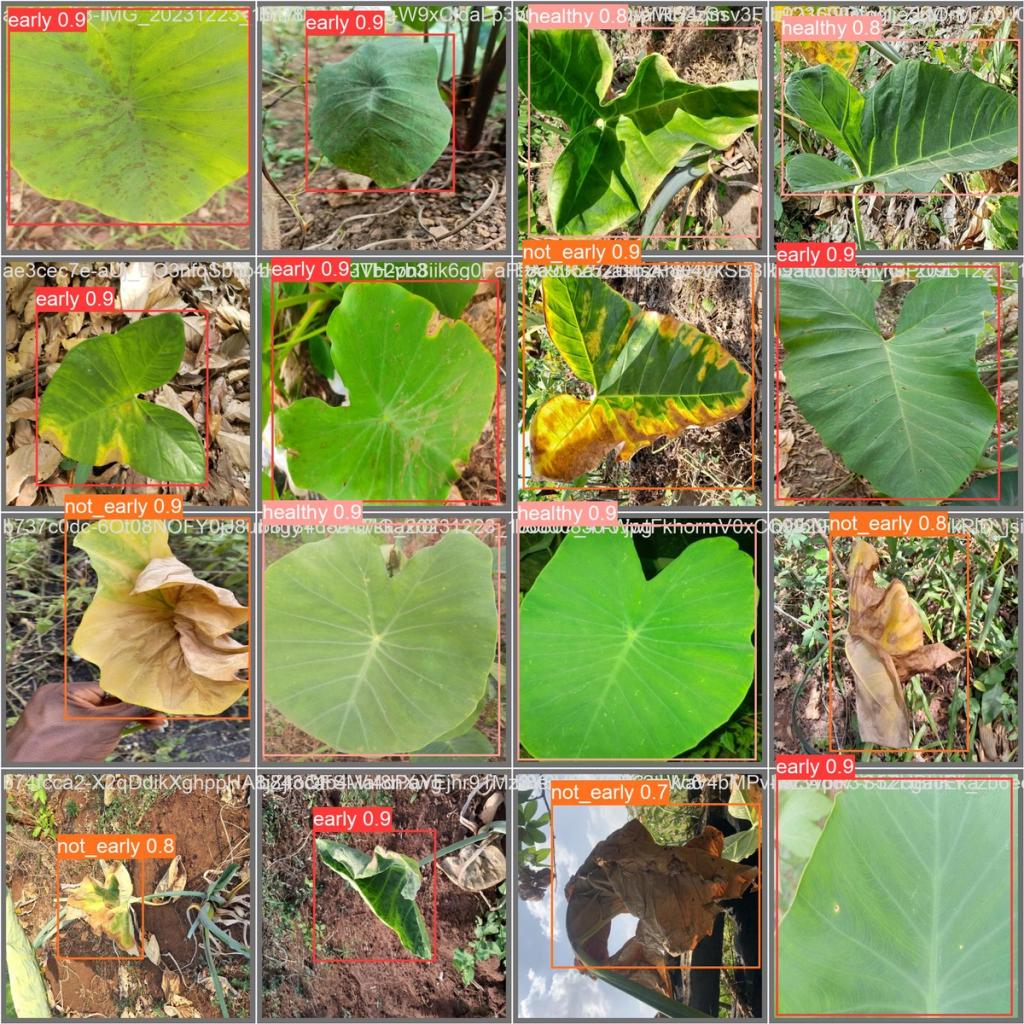
Photo Credit: University of Lagos
Overview
A team of researchers has developed a free, AI-powered Android application that detects Taro Leaf Blight disease in real time putting expert-level agricultural diagnostics directly into the hands of smallholder farmers across West Africa, using nothing more than a low-cost smartphone.
Taro is a critical staple crop for millions of poor households in Nigeria and Ghana, providing an affordable source of protein and carbohydrates for communities with few alternatives. Yet smallholder farmers who lack access to agricultural scientists or extension workers routinely lose harvests to Taro Leaf Blight, a disease that spreads rapidly and can devastate yields if not caught early. Without timely diagnosis, farmers have little recourse but to watch their crops fail, deepening food insecurity and economic hardship.
To address this, researchers built and deployed an Android application powered by a YOLOv8 model trained on 18,248 images of Taro crops, documenting four disease stages Early Blight, Mid Blight, Late Blight, and Healthy. Designed specifically for low-end smartphones, the app works without expensive hardware and includes treatment and prevention recommendations using verified fungicides directly alongside each diagnosis. The underlying dataset has been published openly on Mendeley Data, the code open-sourced on GitHub, and the app made freely downloadable ensuring the broader scientific community can build on the work. To reach farmers without devices, the team provided 10 low-cost Android phones to participants who lacked them.
Beta testing with 42 farmers, extension workers, research technicians, and agricultural scientists validated both the app's accuracy and its usability in the field. Early detection is now enabling farmers to intervene before disease spreads, reducing crop losses and associated costs. With food security for vulnerable smallholders at stake, the project offers a replicable, open-source model for responsible AI deployment in low-resource agricultural settings with plans already underway to add local language support in Igbo to further extend its reach.