AI4D at AI for Good and Geneva AI Week 2026

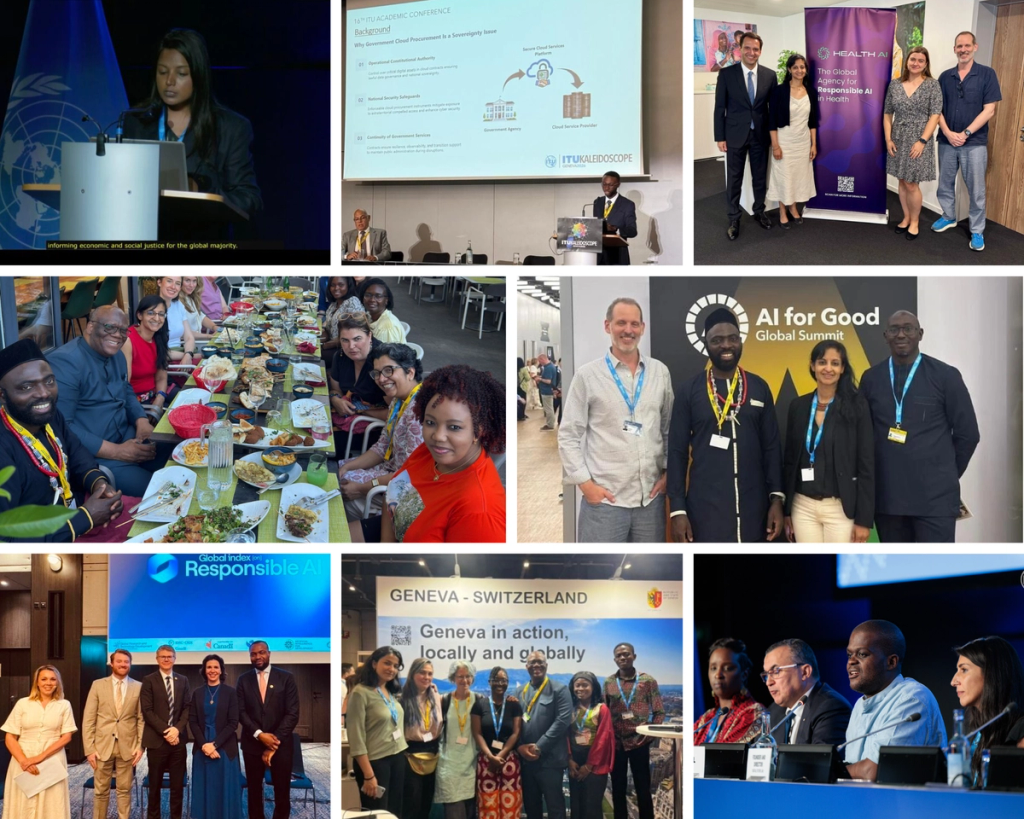
For one week in July 2026, Geneva became a meeting point for some of the biggest conversations shaping the future of artificial intelligence.
Across conference halls, roundtables, research presentations and side events, policymakers, scientists, researchers and technology leaders gathered to discuss how AI should be developed, governed and used. The programme stretched across the AI for Good Global Summit, the UN Global Dialogue on AI Governance, the ITU Kaleidoscope Academic Conference and a busy calendar of partner meetings and launches.
AI4D researchers were present across all of them.
They presented new research, launched major global initiatives, spoke about the realities of building AI ecosystems in the Global South and connected with governments, multilateral organisations and fellow researchers. Some stepped onto major stages. Others contributed through smaller workshops and closed discussions. Early-career researchers also had the chance to present their work to an international community, with one receiving a Young Author Award.
What emerged was not simply a list of conference appearances. It was a picture of a research community increasingly helping shape global conversations on AI, while keeping local needs, regional experience and practical evidence firmly in view.
Where research meets global policy
The week unfolded across very different settings.
For Professor Jerry John Kponyo, Geneva offered a rare opportunity to move between research, policy and international collaboration in the space of just a few days.
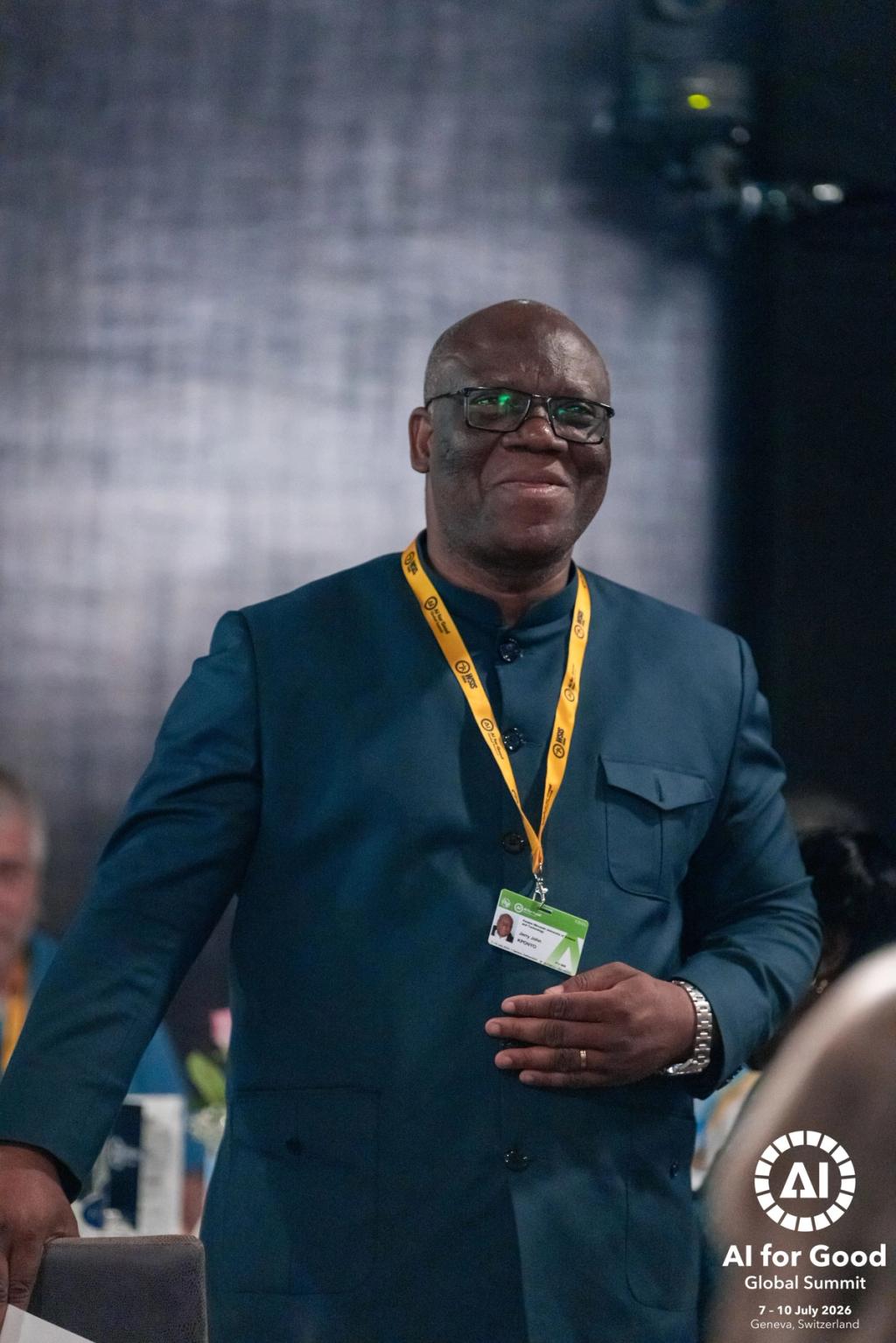
As a member of the ITU Academic Advisory Body on Emerging Technologies and chair of its AI Working Group, he joined fellow experts at the ITU Kaleidoscope Academic Conference to share the group's reflections on the emerging issues shaping AI and the priorities that governments, academia and industry should be preparing for. Ahead of the conference, members of the Advisory Body also met with the ITU Secretary-General to discuss their work and the growing role of academic expertise in informing global technology policy.
Research remained at the centre of the week. Professor Kponyo's team presented two peer-reviewed papers at Kaleidoscope, with one of the student authors receiving a Young Author Recognition Award. He also led the presentation of an AI for the Global Majority project exploring inclusive speech recognition for multilingual, low-resource languages. The research focuses on code-switching, such as Twi-English, and aims to make voice technologies more accessible by better reflecting the way people naturally communicate.
Yet, when reflecting on the week, it wasn't the packed schedule or high-level meetings that stood out most.
It was watching young researchers present their work on an international stage, exchange ideas with peers from around the world and gain recognition for research rooted in African contexts. Those moments, he reflected, are just as valuable as the conferences themselves. They help the next generation of researchers build confidence, form new collaborations and see how their work contributes to conversations that reach far beyond their own institutions.
Bringing new evidence into global AI governance
If the conversations in Geneva were about the future of AI governance, they were also about the evidence needed to guide it.
That was reflected in two significant launches during the week, both of which brought new research into discussions on how AI should be governed.
At the opening of the UN Global Dialogue on AI Governance, Dr Joyce Nakatumba-Nabende and Professor Vukosi Marivate joined fellow members of the UN Independent International Scientific Panel on AI for the launch of Beyond AI Hype and Fear. Developed by an international panel of experts, the report provides an independent scientific assessment of the opportunities, risks and governance challenges surrounding AI, offering policymakers a shared evidence base as countries consider their own approaches to AI governance.
The launch set the tone for many of the discussions that followed throughout the week, with questions around inclusion, international cooperation and responsible innovation featuring prominently across the Dialogue and the AI for Good Global Summit.
Just days later, another piece of global evidence entered the conversation.
Dr Rachel Adams and Nicolas Grossman from the Global Center on AI Governance launched the second edition of the Global Index on Responsible AI (GIRAI), bringing together evidence from 135 countries on how governments are developing and implementing responsible AI governance.
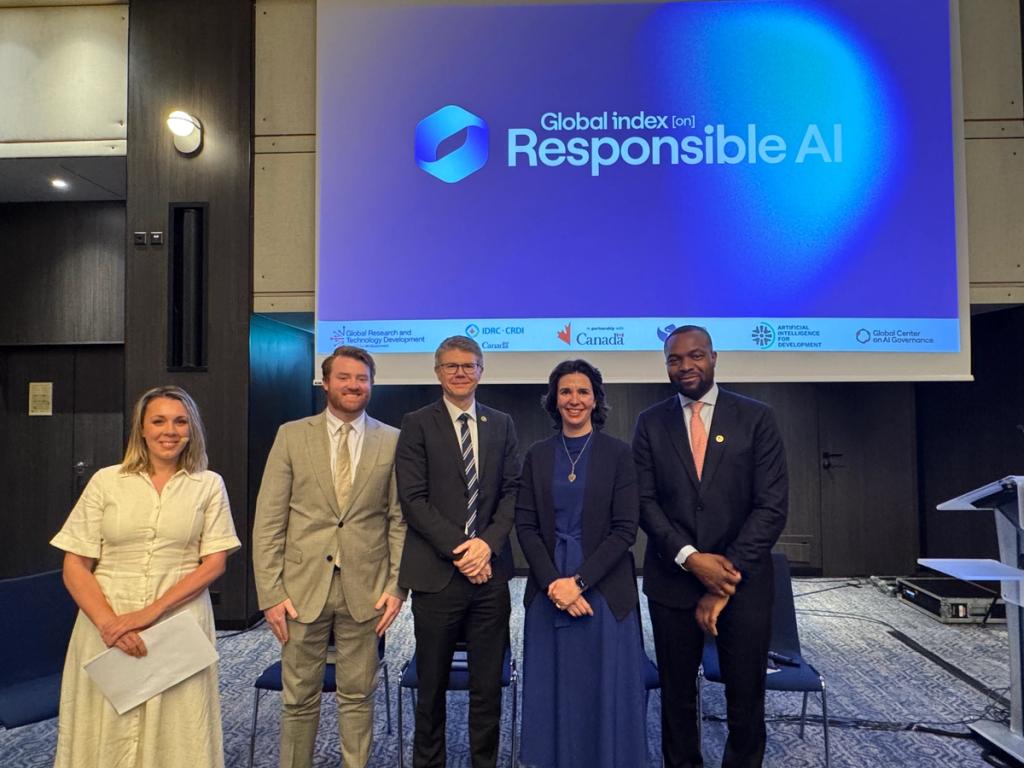
Rather than measuring ambition alone, the Index examines whether governance frameworks are translating into practical action, offering one of the most comprehensive global pictures of responsible AI governance available today.
Together, the two launches underscored an important message that resonated throughout Geneva: meaningful AI governance depends not only on bold ideas, but on robust evidence, independent research and continuous collaboration across regions.
As conversations shifted from governance frameworks to implementation, attention also turned to the ecosystems needed to support responsible AI.
Dr Rachel Adams moderated the AI for Good session Building the Innovation Ecosystems AI Needs, which brought together leaders from government, regional organisations and development programmes to explore what it takes for AI innovation to move beyond promising ideas and deliver lasting impact. The discussion examined the enabling conditions for responsible AI, from policy and access to data to innovation support, cross-sector collaboration and long-term investment.
The session reinforced a recurring theme throughout the week: AI innovation does not happen in isolation. It depends on strong institutions, supportive policy environments and sustained collaboration between governments, researchers, industry and development partner
Health emerged as another key area where responsible AI is beginning to move from possibility to practice. Dr Joyce Nakatumba-Nakabende joined the AI for Good session AI for Health: Scaling Impact through Standards, Investment and Intellectual Property, co-convened by the International Telecommunication Union (ITU) and the World Health Organization (WHO).
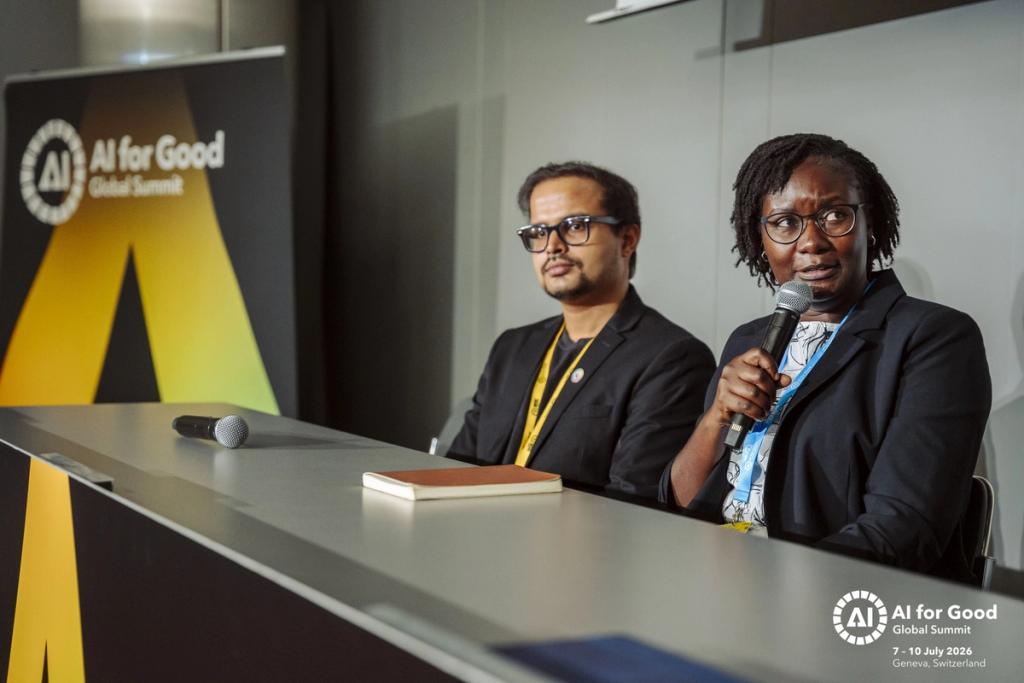
The discussion explored how international standards, investment and equitable approaches to intellectual property can help translate AI innovation into real improvements in healthcare. She also contributed to a Global Ethics side event examining the governance questions that accompany AI's rapid adoption across sectors.
Questions of inclusion extended beyond health. Pria Chetty joined the session Whose Wallet, Whose Future, which examined how AI is reshaping financial systems and what that means for equity, access and economic opportunity. The discussion considered how emerging technologies can expand inclusion while ensuring that the benefits of AI are shared more broadly.
Capacity building was another recurring theme throughout the week. Seydina Moussa Ndiaye participated in the launch of the Global Network on AI Capacity Building, bringing together representatives from governments, international organisations and research institutions to strengthen collaboration on AI skills and knowledge sharing. During the UN Global Dialogue on AI Governance, he also spoke about the network's role in supporting countries as they develop their own AI capabilities. Alongside the formal programme, he participated in bilateral meetings with government representatives and was invited to join the advisory body for Frontiers' Scientific Diplomacy initiative, reflecting the growing recognition of AI4D expertise within international AI policy networks.
Taken together, these conversations reinforced a common message. Building trustworthy AI requires more than technical breakthroughs. It depends on strong research ecosystems, investment in people and institutions, international cooperation and a commitment to ensuring that the benefits of AI reach communities everywhere.
As Geneva AI Week came to a close, one thing was clear: the conversations shaping the future of AI are no longer happening in one place or among one group of voices.
Across conference stages, research presentations, policy dialogues and informal meetings, AI4D researchers contributed evidence, shared practical experience and built new partnerships that will continue long after the week itself. Whether presenting award-winning research, launching global reports, moderating discussions or helping shape international initiatives, they brought perspectives grounded in local realities to conversations with global reach.
The work now continues beyond Geneva.