AI4D Network Experts Appointed to UN’s First Independent International Scientific Panel on Artificial Intelligence
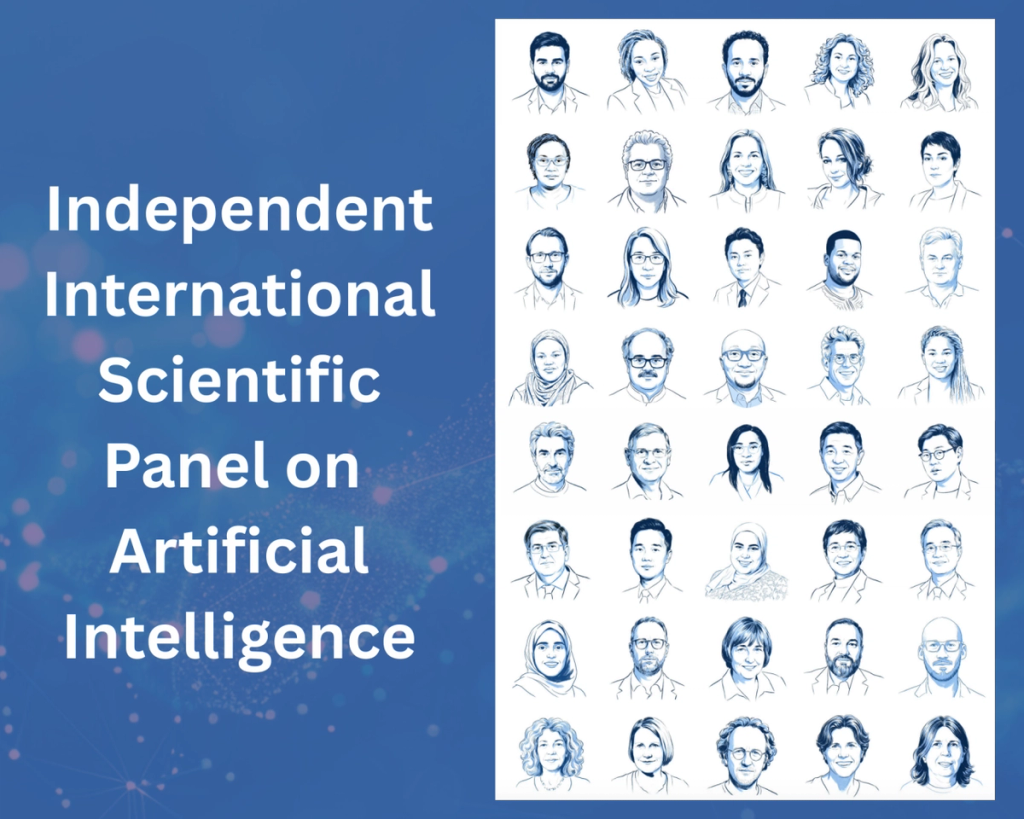
The United Nations General Assembly formally appointed the 40 members of the Independent International Scientific Panel on Artificial Intelligence, marking a significant milestone in global AI governance. The Panel is the first standing United Nations scientific body dedicated exclusively to AI and is mandated to deliver independent, evidence-based scientific assessments to inform international policy and cooperation.
Designed to place scientific integrity and independence at the centre of global AI efforts, the Panel will provide insights on the opportunities, risks, and impacts of AI, including in the context of the Global Dialogue on AI Governance. Its work will span key areas such as safe and trustworthy AI systems, open-source and open data approaches, transparency and accountability, human oversight, and the protection and promotion of human rights.
From the AI4D Network of Labs, which connects research and innovation laboratories across Africa to advance responsible, locally relevant AI, three experts were appointed to the Panel.Commenting on his appointment, Tegawendé F. Bissyandé,Principal Investigator of the Center of Interdisciplinary Excellence in Artificial Intelligence for Development, Burkina Faso said:
“This appointment carries special meaning because it validates what our AI4D ecosystem has long championed: that African researchers must be at the forefront of global conversations on AI for the benefit of our communities. As a Professor at the University of Luxembourg and founding coordinator of CITADEL in Burkina Faso, I have the privilege of being anchored in both a leading European research institution and the concrete realities of AI development in West Africa. Through CITADEL, we have demonstrated that investing in local AI talent yields dividends far beyond national borders. As a member of this Panel, I will advocate for scientific assessments that centre the lived realities of developing countries from AI safety and security challenges to linguistic inclusion, and to harnessing AI as a force for good in health, education, agriculture, and governance. The fact that Africa has multiple voices on this Panel is a testament to the growing recognition that AI governance without the Global South is incomplete governance.”
Dr. Joyce Nabende, Principal Investigator at the Makerere University Centre for Artificial Intelligence, Uganda shared that,
“The appointment on the panel is a great opportunity for me to bring scientific evidence from the Global South on the development and governance of Artificial Intelligence”
Vukosi Marivate, Principal Investigator of the AI4D African Languages Lab, South Africa said he is
“Honoured to have been selected to serve on this panel. I look forward to continuing to share experiences and perspectives from across the African continent, and to learning from the rich insights and expertise of my fellow panelists.”
The new UN panel, established by General Assembly resolution in 2025, will examine real-world AI opportunities, risks and impacts relevant to policy, including:
▪️ safe, secure and trustworthy AI systems
▪️ open-source software, open data and open AI models
▪️ social, economic, ethical, cultural, linguistic and technical implications of AI
▪️ transparency, accountability and meaningful human oversight
▪️ protection and promotion of human rights in the context of AI